
The best website support in Singapore is built around business continuity
Singapore businesses often run lean teams, paid campaigns, ecommerce and lead-generation sites that cannot wait for the original developer to become available. A useful support plan therefore needs more than WordPress updates: it needs monitoring, recovery, clear response priorities and someone who can test the customer journey after changes.
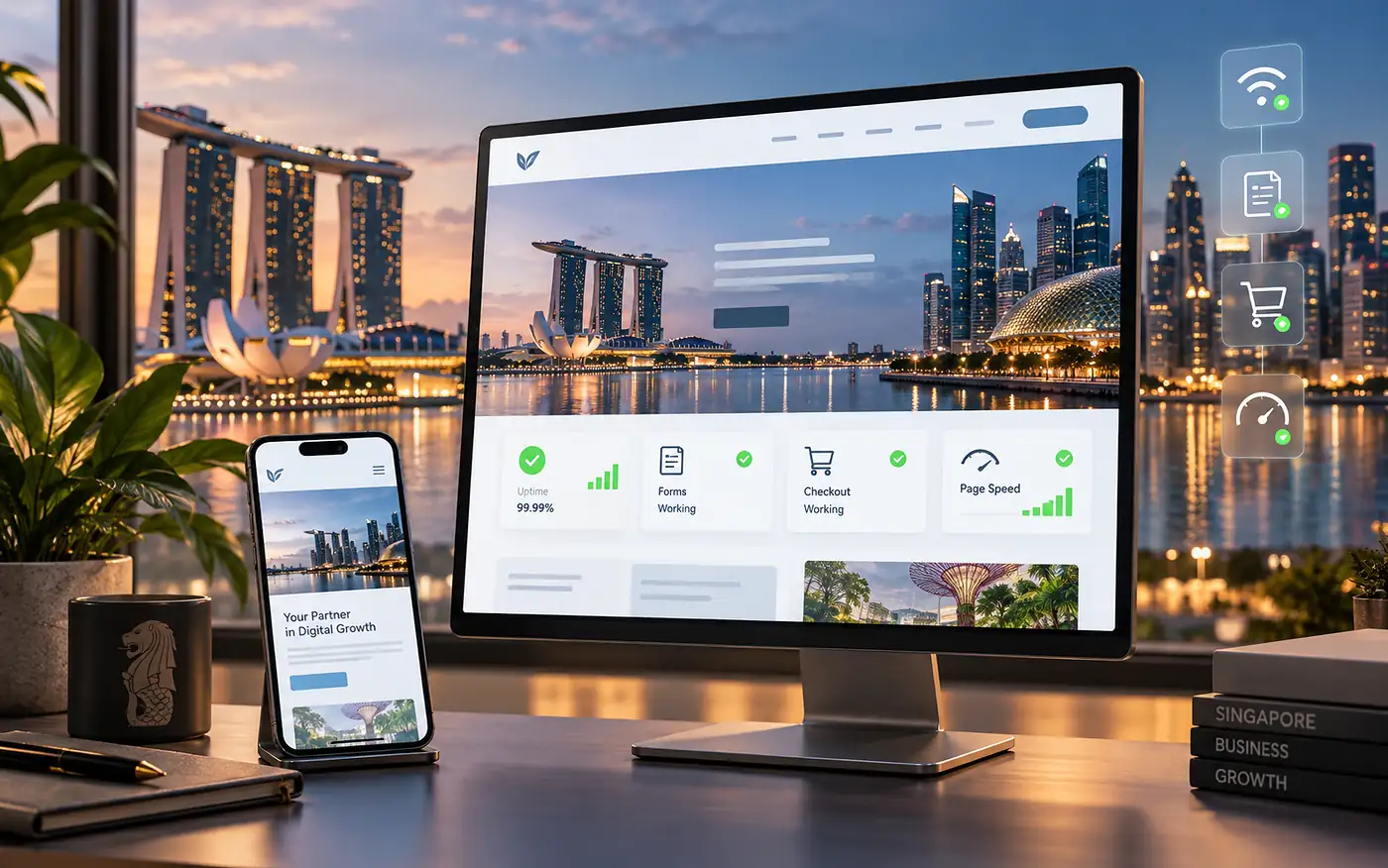
Build the support plan around four operational layers
Uptime monitoring, SSL awareness, hosting checks and a named incident route help reduce the time between a failure and the start of investigation.
Backups need the database, uploads and code required for a usable restore. A tested recovery process matters more than a “backup enabled” badge.
WordPress core, plugins, themes and PHP change at different times. Updates should be reviewed together instead of treated as unrelated clicks.
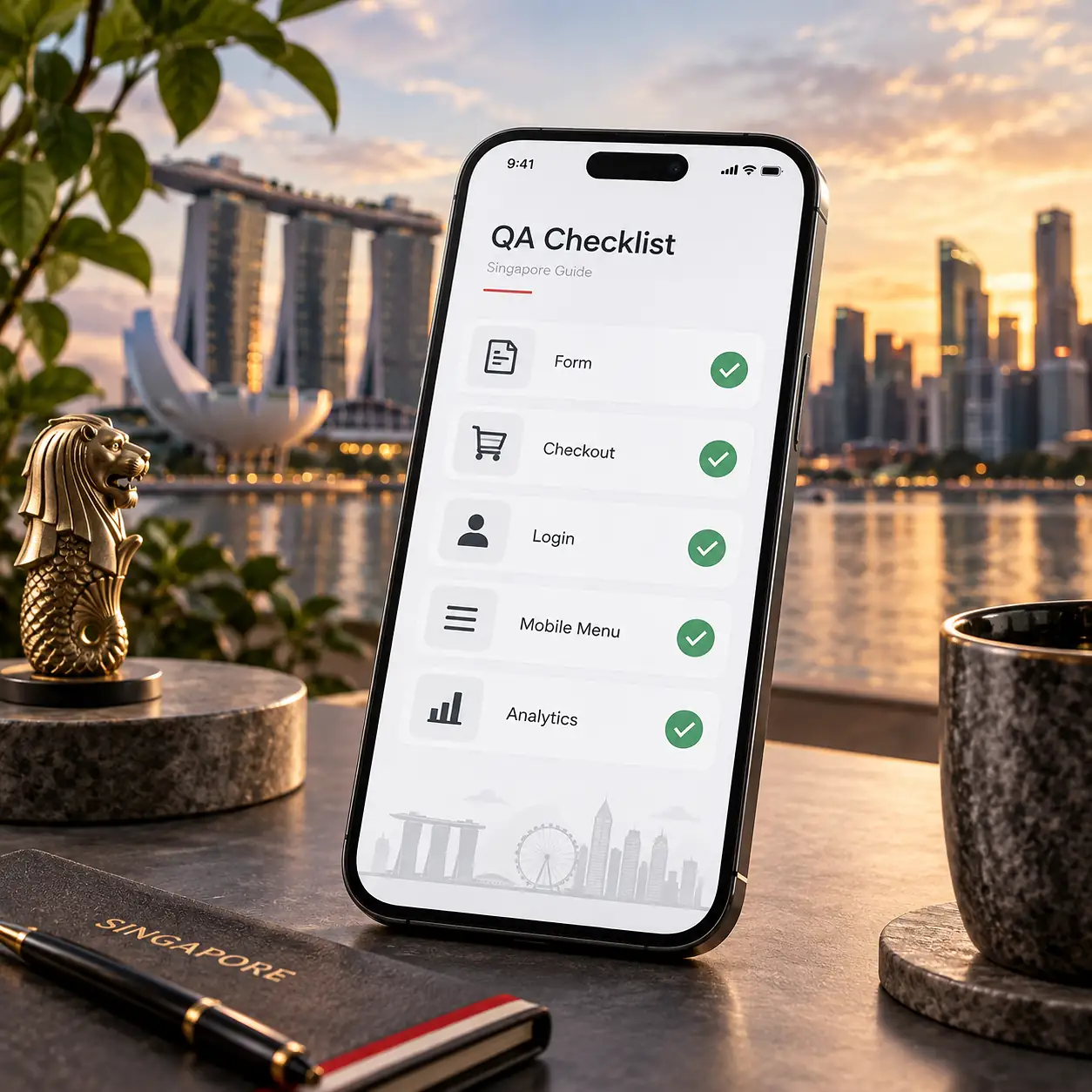
After changes, check forms, checkout, account login, tracking and mobile layouts—the parts of the site tied directly to business outcomes.
For Singapore, response windows need to be explicit
If your customers are active during Singapore Time, ask who receives an outage alert during those hours and what happens after the alert. A provider in another country can still work well if there is real SGT overlap, a defined escalation path and enough context to act without waiting for a long handover call.

What to test after every meaningful WordPress change
- Homepage and primary landing pages
- Contact and quote forms
- Checkout and payment flow if applicable
- Login, account or membership areas
- Mobile navigation and sticky elements
- Analytics and conversion tracking
- Page caching and dynamic content
- Transactional email delivery
Maintenance plans should state what happens when the site is already unhealthy
A site with years of delayed updates, abandoned plugins or unexplained custom code may need stabilisation before it can enter a normal monthly routine. That is not the same as routine maintenance. Ask whether onboarding includes a technical audit and whether backlog remediation is quoted separately.
This distinction prevents a common mismatch: the client buys a small monthly plan expecting it to repair accumulated technical debt, while the provider prices the plan assuming a healthy baseline. A transparent onboarding step gives both sides a clearer starting point.
Security and privacy are part of the support workflow
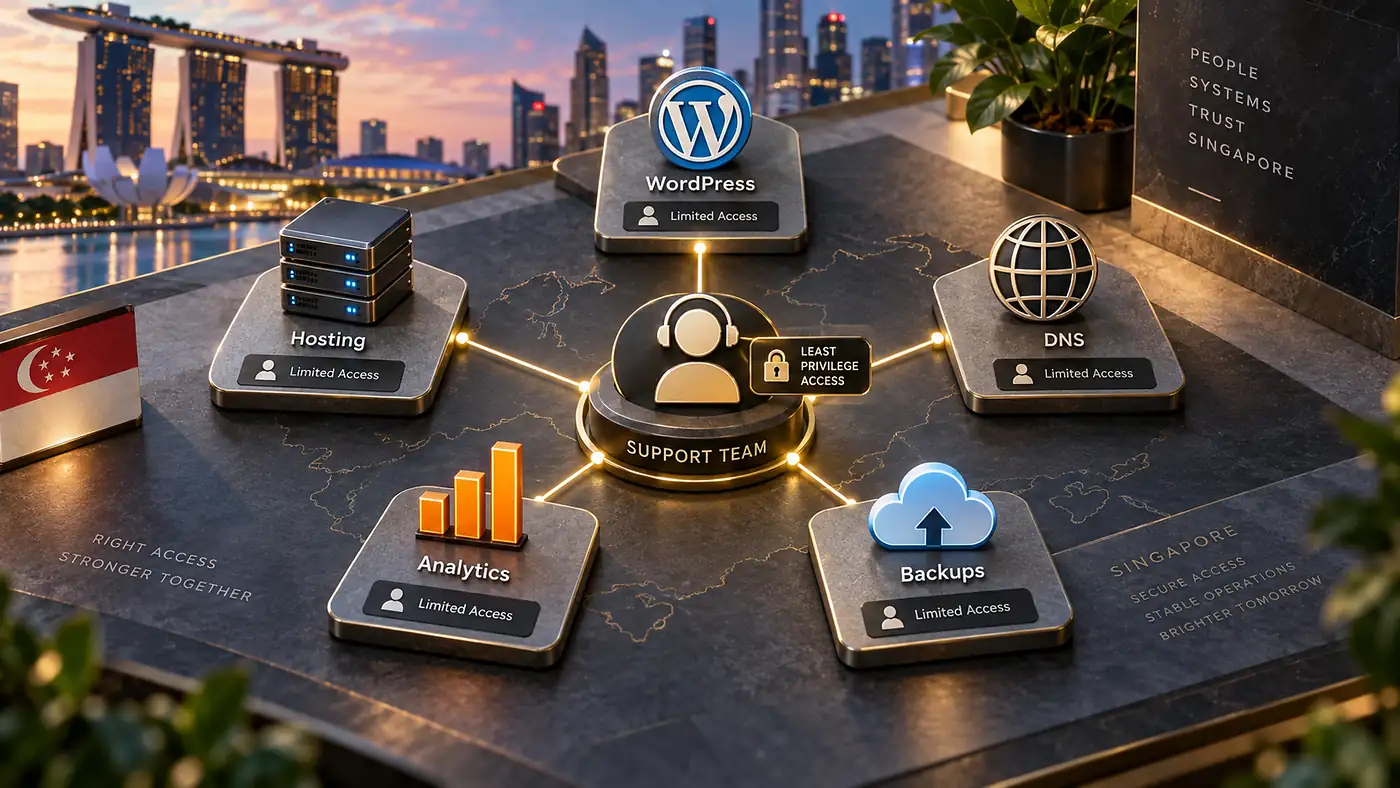
Support may require access to hosting, backups, analytics, CRM connections and user submissions. Businesses should define who receives credentials, how access is revoked, where backups are stored and which systems contain personal data. Singapore organisations may also have privacy obligations that affect these choices, so align the technical process with your own compliance requirements.
When to choose ongoing support instead of one-off fixes
One-off help can be enough for a small brochure site that rarely changes. Ongoing support becomes more useful when the site has ecommerce, several business integrations, frequent content changes, active paid campaigns or a measurable cost of downtime. The more systems depend on the website, the more important monitoring and recovery become.
Blyfa’s website support service is designed around ongoing care rather than a rebuild-first approach. For practical maintenance topics, browse the Website Support guides; if search growth is the main objective, see the separate SEO service.
Make support measurable
Define what is monitored, what is backed up, which journeys are tested and how urgent issues are escalated before comparing monthly prices.
Discuss Singapore website support
Short comments related to this article.